


The "Shelf" We Didn't Mean to Build: Finding Purpose in the Winter of Life
- donnaschiehsl
- Apr 18
- 5 min read

We don’t say it out loud.
We would never call it this.
But it happens all the time.
An older parent reaches their eighties, and without anyone intending it, life starts to shrink around them.
They are safe.
They are “fine.”
They are still here.
And yet…
We slowly place them on a shelf.
The Holiday-Only Life
We take them down for the holidays.
We bring them to Christmas dinner or Easter brunch.
We dress them nicely.
We make sure their hair looks good.
We take a hundred pictures, smiling pictures, because we want to remember them this way.
We post the best ones.
We feel relief.
We feel grateful.
We feel tender.
And then, once the holiday passes, we put them back.
Back onto this shelf we didn’t know we created.
Back to long days in the same chair.
Back to quiet kitchens and silent televisions.
Back to a calendar with no real reason to look forward.

Why We Build the Shelf
The hardest part about the “shelf” is that it’s rarely built out of cruelty.
It’s built out of life.
Life gets full.
Work gets demanding.
Kids and grandkids have needs.
Marriages need attention.
Bills stack up.
A schedule falls apart.
And without realizing it, the older adult becomes someone we love deeply… but only see occasionally.
At first, it looks reasonable.
You call when you can.
You stop by when you’re in the area.
You do the big things: doctor appointments, grocery runs, prescriptions.
And then, slowly, something shifts.
The relationship becomes mostly functional.
“Did you take your meds?”
“Do you need anything?”
“Your appointment is Tuesday.”
It’s not that we don’t care.
It’s that caregiving quietly turns a beloved person into a “to-do list.”
Winter Is a Real Season
Most of us understand life in seasons when we’re talking about ourselves.
We expect seasons of growth.
Seasons of building.
But somewhere along the line, we started treating old age like it isn’t a season at all.
More like a slow fade-out.
Like the credits are already rolling.
Here’s the truth: Winter is still a season.
And winter isn’t wasted.
In winter, things become quieter.
In winter, life slows down.
In winter, what matters most is what’s underneath, roots, foundations, strength, endurance.
Winter isn’t flashy, but it’s essential.
It has its own kind of beauty.
Its own kind of work.
And its own kind of purpose.
Because the God who walked with your parent in their twenties is not suddenly absent in their eighties.
As the prophet Isaiah reminds us:
“Even to your old age I am he, and to gray hairs I will carry you. I have made, and I will bear; I will carry and will save.” , Isaiah 46:4 (ESV)
Notice what God says He will do: carry… bear… carry… save.
Your parent is not forgotten.
Not discarded.
Not “done.”
The Hidden Cost of Being “Fine”
Sometimes we say, “They’re fine.”
And medically, maybe they are.
They have a roof.
They have food.
They aren't missing medications.
But “fine” can be a dangerously low standard.
A person can be stable, and still be fading.
When someone is shelved long enough, they stop initiating.
They stop hoping.
They stop contributing.
They start to believe they’re a burden.
And burden-thoughts change people.
This is often where we start seeing things we label as “just old age”: apathy, irritability, withdrawal.
But Scripture teaches the opposite, especially for believers.
“The righteous flourish like the palm tree and grow like a cedar in Lebanon. They still bear fruit in old age; they are ever full of sap and green.” , Psalm 92:12–14 (ESV)
They still bear fruit.
Not “they used to.”
Still.
Today.
Moving from the "Shelf" to the "Circle"
So what are we aiming for?
Not constant activity.
Not forced social events.
We’re aiming for one simple shift:
Move them from the shelf back into the circle.
The circle is ordinary life.
The circle is belonging.
The circle is the sense that they still matter between holidays.
That they are still part of “us.”
And yes, this takes intention.
In most families, honor doesn’t happen automatically.
It has to be chosen.
“You shall stand up before the gray head and honor the face of an old man, and you shall fear your God: I am the LORD.” , Leviticus 19:32 (ESV)
That verse doesn’t say, “Honor them when they’re pleasant.”
It says honor them, and it connects that honor directly to reverence for God.
Understanding the Three Quiet Fears
Sometimes we try to bring them into the circle, and they resist.
They decline the invitation.
They keep the phone call short.
Often, what looks like stubbornness is actually fear.
1. Fear of being a burden. They may think, “My needs are too much.” So they minimize. They hide.
2. Fear of losing control. When your body betrays you, saying “no” is the last place you still feel powerful.
3. Fear of humiliation. Aging can bring embarrassment: about memory, hearing loss, or slower walking. The shelf feels safer than being seen struggling.
When we understand this, we move from correction to comfort.
We stop saying, "You need to get out more," and start saying, "I just want you to feel less alone."

Practical Steps: The Legacy Thread
One of the best ways to invite purpose back is to create a Legacy Thread.
This isn't a big project.
It’s a simple rhythm of remembering.
Choose one day a week.
Ask one meaningful question.
Listen without rushing.
Questions you can use:
“What was your first job, and what did it teach you?”
“What do you wish you’d known at 40?”
“What is something God taught you the hard way?”
“What do you want your grandchildren to remember about you?”
If you want your parent to feel less shelved, stop only doing tasks for them, and start drawing something from them.
Let them feel like they are giving, not just taking.
Try This: Small Faithful Steps
You don’t need to overhaul your whole life today.
You just need one small, faithful step.
Ask one question that opens a door: “What feels hardest right now for you?”
Create two small touchpoints: One short 5-minute call and one short visit or errand ride-along.
Invite one contribution: A prayer request, help folding towels, or choosing a meal.
Make it simple.
Make it enjoyable.
If you are standing in the tension between love and exhaustion...
Take a breath.
This season is not a waiting room.
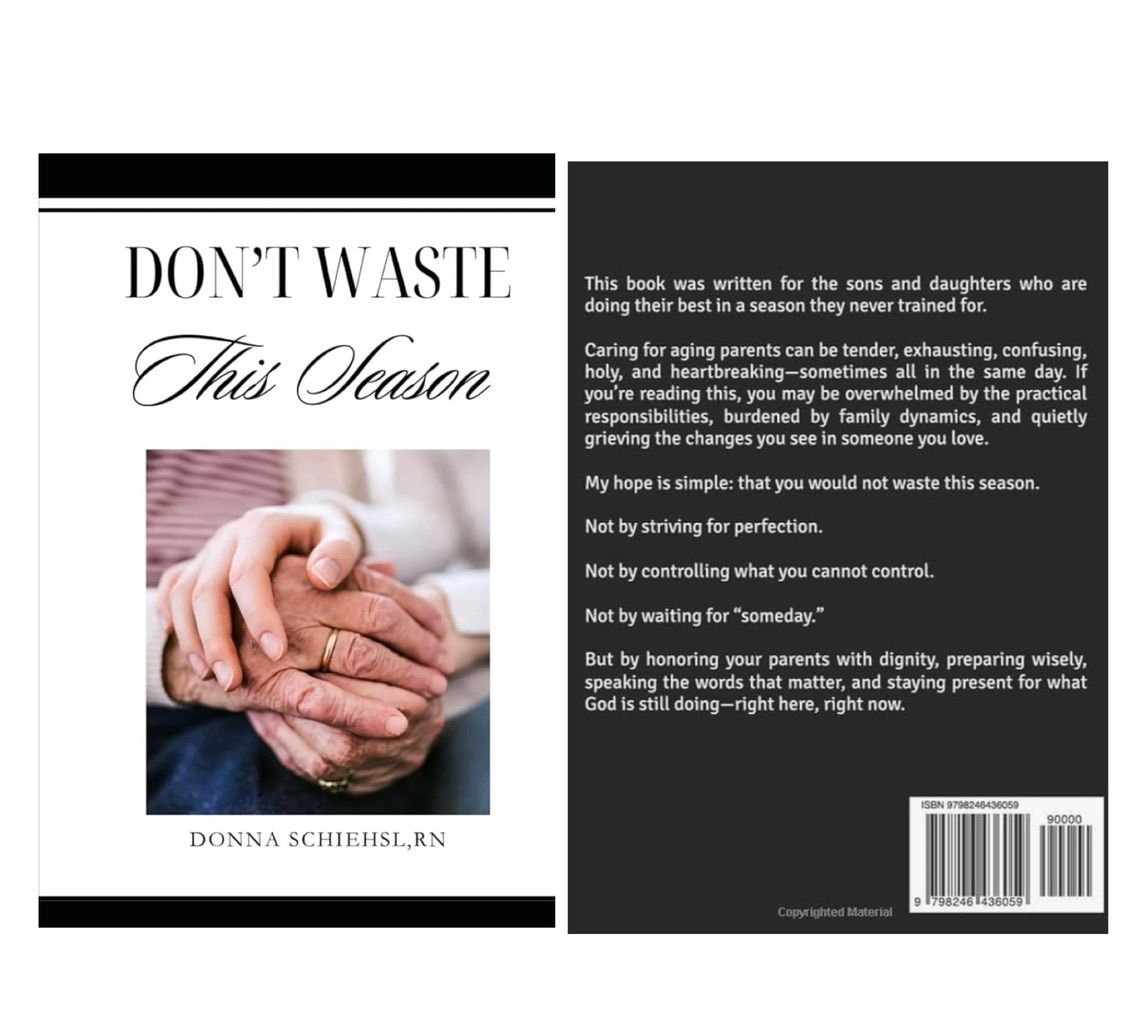
It is a season God still occupies.
He is not wasting this season.
And you don't have to either.
The last chapters of a life can still be full of dignity, blessing, and fruit.
And you are the one who can help make that possible.

If you're feeling overwhelmed and need a partner in this journey, you can always book a one-on-one session to talk through your specific situation.
We are in this together.
Visit our blog for more resources on navigating the complexities of caregiving with grace and faith.
Don't let this season slip away.
Reach out.
Listen.
Honor.
Invite them back into the circle.

Comments